Top 5 Software Solutions for DMCs
Explore the top software solutions tailored for Destination Management Companies, simplifying operations, sales, and financial management.
· malysddm

- Odys: Best for growing DMCs with automation needs. Offers sales management, financial tools, and seamless integrations starting at $300/month.
- Tourwriter: Ideal for creating visually stunning itineraries and proposals. Pricing starts at $199/month with booking fees.
- Wetu: Focuses on visual presentation tools like 3D maps and interactive media. Best for small-scale operations, starting at $199/month.
- Tourplan: Built for large-scale, multinational DMCs. Handles complex operations at $1,500/month.
- Toogo: Excels in advanced pricing calculations for luxury and custom tours. One-time purchase model.
Quick Comparison
| Feature | Odys | Tourwriter | Wetu | Tourplan | Toogo |
|---|---|---|---|---|---|
| Best For | Automation, growth | Visual proposals | Visuals | Large-scale ops | Complex pricing |
| Pricing | $300-$500/month | $199-$599/month | $199+/month | $1,500/month | One-time purchase |
| Setup Time | 2-3 weeks | 4-6 weeks | 1-2 weeks | 12-16 weeks | 12-16 weeks |
| Scalability | High | Moderate | Limited | High | Moderate |
| Key Strength | Automation tools | Visual interfaces | Presentation | Large capacity | Pricing engine |
Each tool has unique strengths tailored to different DMC sizes and needs. Dive into the full article for a detailed breakdown of features, pricing, and integration capabilities.
1. Odys
Core Features
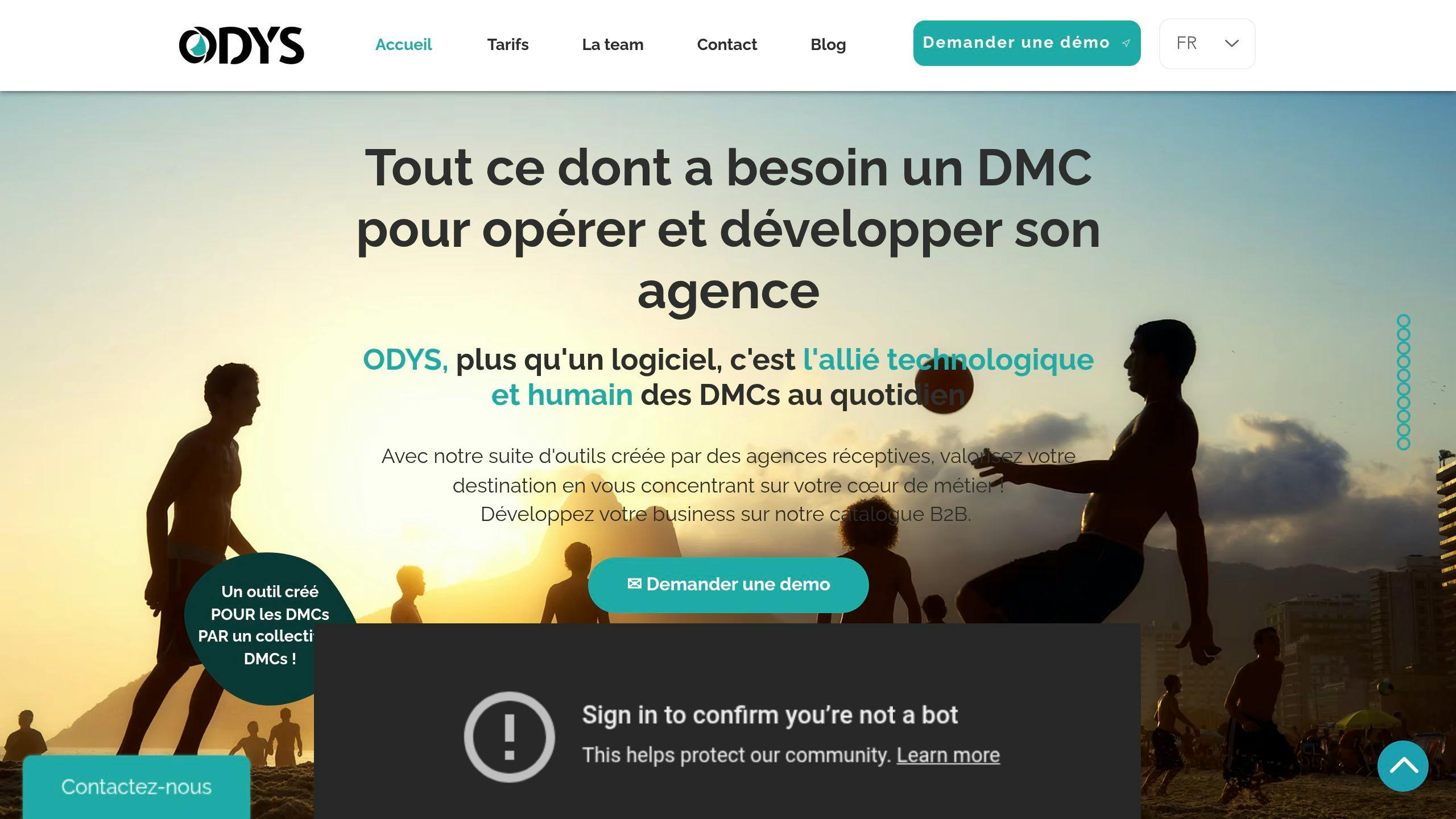
Odys is designed specifically for DMCs, focusing on three key areas: sales management, operations automation, and financial control. Its semi-automated quotation tools, powered by a template library, can cut processing time by 40% [7]. Meanwhile, its financial tools reduce payment errors by 30% through automated reconciliation systems [2].
The platform also simplifies B2B collaboration with real-time booking adjustments via dedicated agency portals, making communication between DMCs and partners more efficient.
Integration Capabilities
Odys integrates smoothly with a variety of essential business systems:
| Systems |
|---|
| Hotelbeds, Voyageurs du Monde |
| Evaneos, KimKim, TravelLocal, WeDesignTrips… |
| Stripe, Wordline, PayTravel |
These integrations work alongside Odys' financial tools to create a streamlined system for managing revenue.
Pricing Model
| Company Size | Monthly Fee |
|---|---|
| Small | $300 |
| Medium | $400 |
| Large | $500 |
Scalability
Built on a modern cloud-based infrastructure, Odys supports unlimited sub-accounts, making it ideal for DMCs expanding into new markets. Its AI-powered upselling engine has helped clients boost upsells by 15% [5]. The system is designed to handle feature expansions seamlessly, especially during periods of high demand.
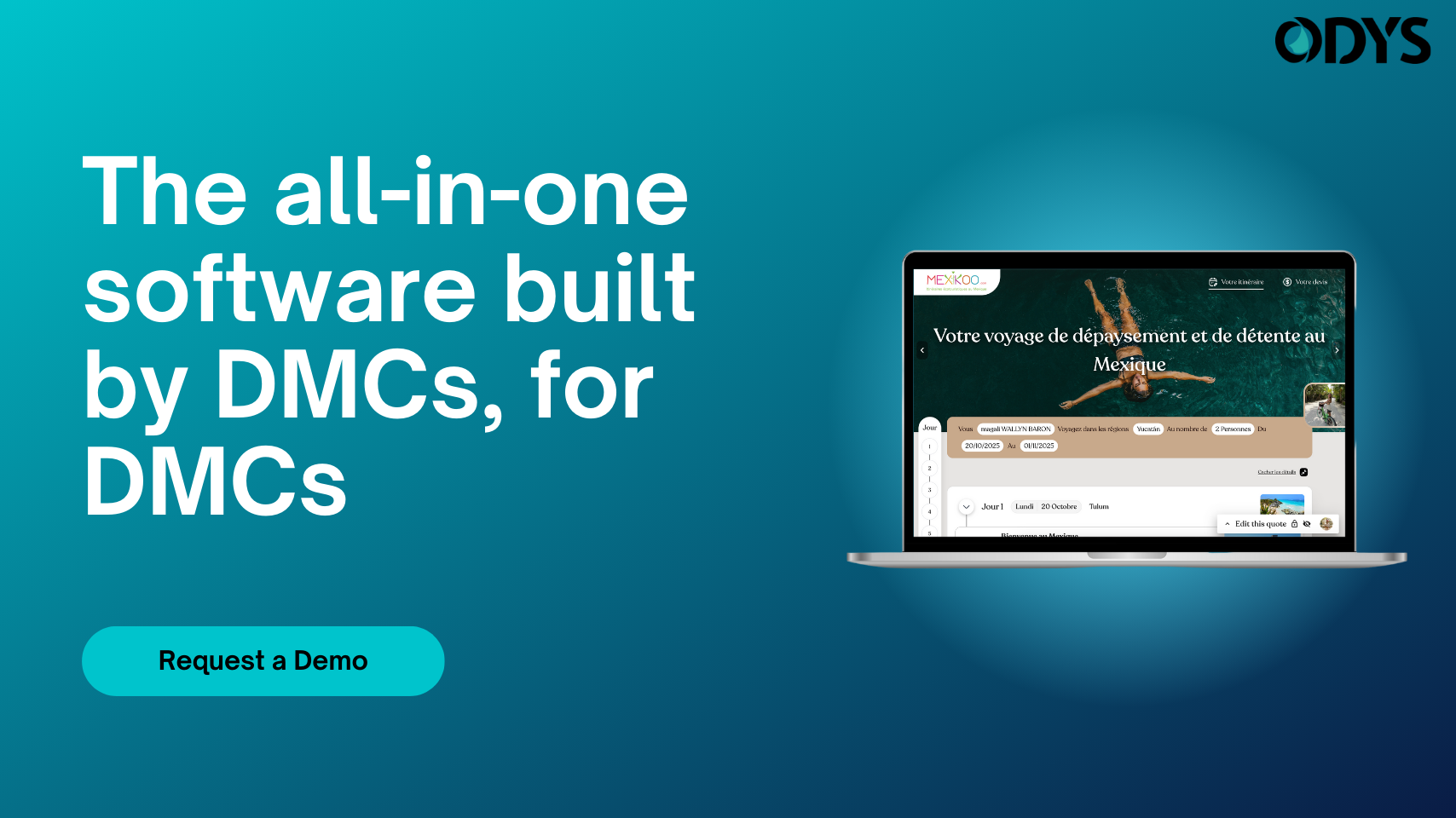
This focus on growth and flexibility makes Odys a strong competitor to higher-priced platforms like Tourwriter.
2. Tourwriter
Core Features
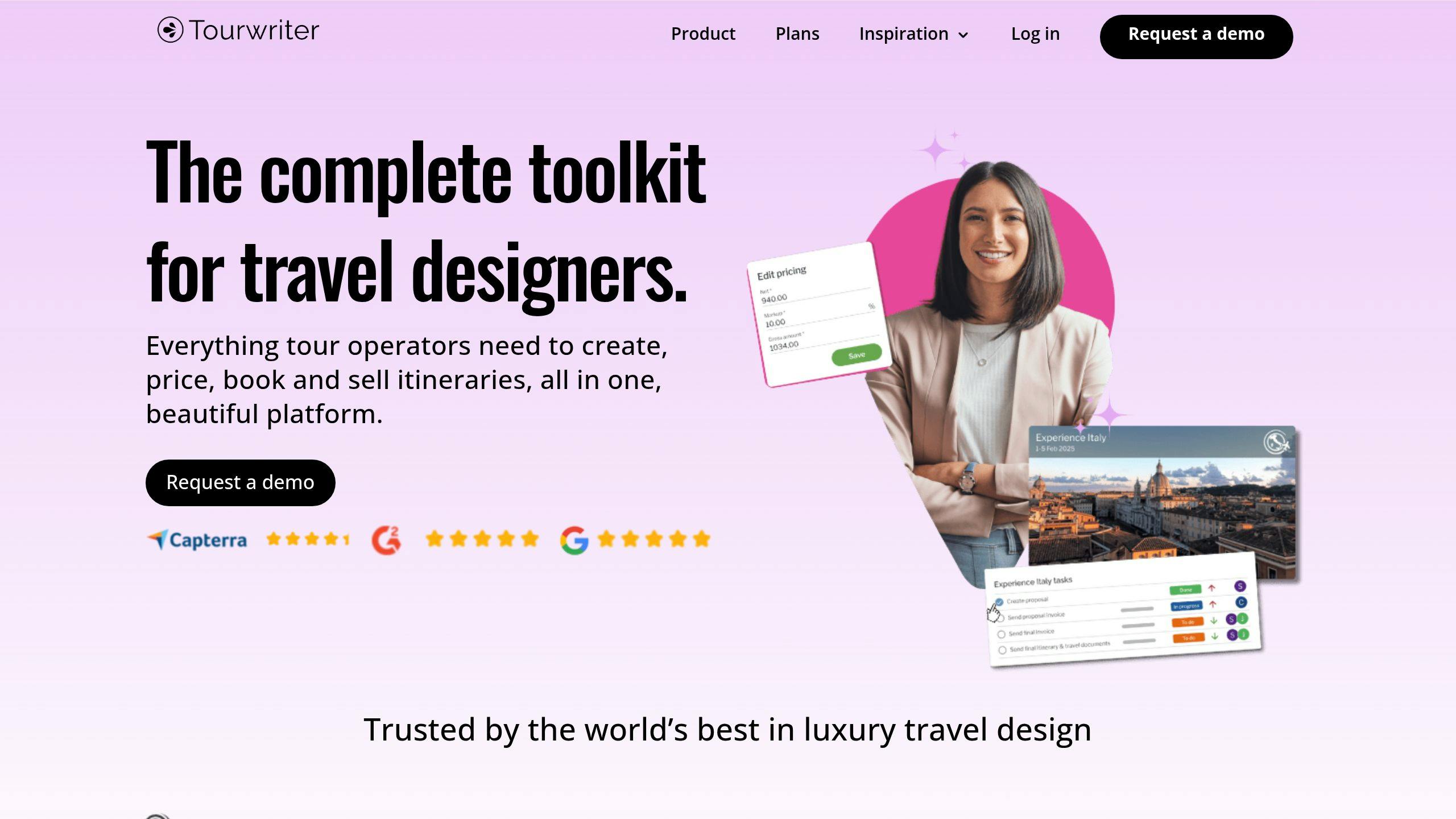
Tourwriter is a high-end choice for those seeking advanced itinerary visualization tools and a streamlined proposal creation system. Its dynamic mapping feature allows users to craft polished, professional proposals quickly [1][3].
The platform’s visual interface integrates accommodations and activities while automatically checking bedbank availability. This removes the need for manual inventory checks and ensures accuracy.
Pricing Model
Tourwriter offers a tiered pricing plan that adjusts based on the size and needs of your DMC:
| DMC Size | Monthly Base Fee | Booking Fee | Features |
|---|---|---|---|
| Small (<50 clients) | $199 | $2/booking | 5 itinerary templates |
| Medium | $399 | Volume-based | 20 templates + API access |
| Enterprise | $599+ | Unlimited | Unlimited templates + full customization |
Integration Capabilities
Tourwriter connects seamlessly with various tools, including:
- Accounting: Sage Intacct and other regional platforms
- Bedbanks: Multi-supplier API integrations
- Payments: Custom gateway setups for tailored payment solutions
Scalability
Tourwriter’s modular design makes it well-suited for growing DMCs. The white-label proposal builder is a standout feature, allowing businesses to create branded proposals with built-in booking options. This functionality is especially helpful for B2B partnerships, making it an excellent choice for medium-sized DMCs looking to expand into enterprise-level operations [5].
3. Wetu
Core Features
Wetu is known for its strength in creating visually appealing proposals, making it a standout in the DMC software space. It shines as a tool for visual presentation, offering features like:
- 3D destination maps
- Drag-and-drop itinerary builders
- Branded template libraries
- Interactive media embedding
While Wetu is excellent for client-facing visuals, it struggles with operational demands, especially for larger-scale operations.
Integration Capabilities
Wetu emphasizes connections with third-party tools, particularly those that enhance presentation quality. Here's a quick look at its integration partners:
| System Type | Integration Partners |
|---|---|
| Tour Operations | Tourplan NX, Rezdy - Inventory synchronization |
| CRM Solutions | Salesforce, HubSpot - Customer data sync |
Scalability
Wetu works best for businesses managing up to 50 tours annually. Beyond this, its limitations become evident. Handling complex itineraries often requires workarounds, and the platform lacks robust tools for capacity planning. For growing enterprises, Wetu is better used alongside full-featured solutions like Odys.
Pricing Model
The platform offers subscription plans starting at $199 per month for basic features.
One example of its impact: A Seychelles-based DMC reported a 35% increase in proposal acceptance rates after using Wetu's 360° virtual tours [5]. However, experts suggest pairing Wetu with operationally focused tools for a more complete DMC management setup [3][5].
Tourplan Tour Operator & DMC Software
4. Tourplan
Tourplan is built for DMCs managing multinational operations, offering a robust alternative to Wetu's presentation-focused tools.
Core Features
Tourplan is tailored for large-scale DMCs, tackling complex tasks with ease. Some of its key capabilities include:
- Managing over 500 traveler groups at the same time, ensuring seamless coordination across departments
- Centralizing global inventory for streamlined operations
- Tracking commissions for worldwide partner networks with precision
Pricing Model
Tourplan is priced at $1,500 per month per DMC, positioning it as a high-end option - about 40% above the industry average for enterprise DMC software [5]. Unlike other platforms that adjust fees based on transaction volume, Tourplan sticks to a fixed rate [1].
| Feature Tier | Monthly Cost | Capacity |
|---|---|---|
| Standard DMC | $1,500 | Single entity |
| Group License | Custom | Multiple DMCs |
Scalability
Tourplan focuses on handling large workloads rather than offering AI-driven features like Odys. Here's what it can do:
- Process over 10 million bookings annually with response times under 2 seconds [5]
- Quickly deploy subsidiary branches using template cloning [4]
- Automatically comply with multi-currency tax requirements
Integration Capabilities
Tourplan supports a wide range of integrations, making it ideal for large-scale operations. Some notable connections include:
| Integration Type | Partners |
|---|---|
| Inventory Systems | Hotelbeds, WebBeds |
| Financial Systems | Xero, QuickBooks Enterprise |
| GDS Connections | Amadeus, Sabre |
"The platform offers extensive integrations" [8]
Due to its complexity, implementing Tourplan takes 12-16 weeks and requires over 40 hours of training [4][5]. While this setup demands time, its features are well-suited for DMCs handling multinational operations.
5. Toogo
Core Features
Toogo stands out by focusing on computational precision rather than flashy interfaces. Its pricing engine is designed to handle even the most complex pricing scenarios, making it a go-to choice for businesses that need detailed and accurate calculations. The quotation system can manage:
- Seasonality-based price changes
- Group discounts
- Dynamic rates tied to supplier agreements
- Multi-destination tour pricing
- Flexible commission setups
This makes it a strong option for DMCs that specialize in luxury tours or intricate multi-operator packages, where accurate pricing takes precedence over modern design.
Pricing Model
Toogo offers a one-time purchase option instead of the more common subscription-based models seen in newer tools [9]. This approach appeals to established DMCs that prefer capital investments over recurring costs.
Scalability
Even with its outdated interface, Toogo performs impressively. It supports up to 500 users simultaneously and processes complex quotes 23% faster than tools that prioritize visual design [5].
| Aspect | Capability |
|---|---|
| Concurrent Users | ~500 users [5] |
| Training Requirements | 12-16 weeks |
| Quote Processing | 23% faster for complex quotes [5] |
Integration Capabilities
Toogo's integration framework may feel dated, but it still provides essential options for connecting with other systems:
| Integration Type | Capabilities |
|---|---|
| Accounting Systems | Compatible with legacy systems via CSV exports |
| Property Management | Works with Opera PMS through custom scripts [3] |
| Data Exchange | Supports CSV-based import/export functionality |
"Toogo's pricing engine remains unmatched" - Travel Tech Monthly, 2023
However, Toogo's lack of native API connections to modern bedbanks and reliance on middleware for basic integrations underscore its technological limitations.
Software Comparison Chart
Here's a breakdown of key differences based on our analysis:
| Feature | Odys | Tourwriter | Wetu | Tourplan | Toogo |
|---|---|---|---|---|---|
| User Interface | Modern and sleek | Easy to navigate | Focused on visuals | Complex and detailed | Dated, relies on manual data handling |
| Implementation Time | 2-3 weeks | 4-6 weeks | 1-2 weeks | 12-16 weeks | 12-16 weeks |
| Best For | Growing DMCs needing automation | Creating visually appealing proposals | Stunning presentations | Large-scale, multi-country operations | Advanced pricing calculations |
| Operational Impact | Limited integration options | Requires higher upfront investment | Lacks operational depth | Long learning curve and setup time | Relies on manual workflows for integration |
The findings highlight that Tourplan is ideal for large-scale operations due to its extensive features, though its complexity and cost make it less appealing to smaller DMCs. Odys strikes a good balance with its modern features and affordability, making it a strong choice for growing businesses. Tourwriter shines in proposal creation but comes with a higher price tag, while Wetu is better suited for creating visually impressive presentations rather than handling full operational needs. Toogo, despite its outdated interface, remains a solid option for businesses requiring detailed pricing capabilities.
These insights are key for tailoring recommendations based on the scale and needs of your operations.
Recommendations by DMC Size
Selecting the right software depends on your DMC's size, how complex your operations are, and what your budget allows. Here's a breakdown based on real-world data:
**Small DMCs (1-20 employees)**For smaller teams, Odys stands out as a top choice. It strikes a great balance between cost and features. Its semi-automated quotation system is a game-changer - Neptune Holidays saw a 34% faster quote process in just three months of use [2][7]. Plus, its pre-built templates make it ideal for lean teams looking to save time.
**Medium DMCs (20-50 employees)**For mid-sized operations, Tourwriter is a strong option. It simplifies client revisions with its visual itinerary builder, cutting revision cycles by 55%. It also integrates seamlessly with QuickBooks, automating most accounting tasks [5][6].
**Large DMCs (50+ employees)**For larger enterprises, Tourplan is worth the $1,500/month price tag. It offers enterprise-level features like yield management, which can boost profit margins by 18%, and automated compliance tracking [3].
| Enterprise Feature | Business Impact |
|---|---|
| Yield Management | 18% margin improvement [3] |
| Compliance Tracking | Automated regulatory adherence |
Specialized CasesIf your DMC deals with complex pricing, Toogo is still a strong contender despite its older interface. Its pricing engine is particularly effective for custom itineraries, making it a solid pick for niche operators who need precision.
Interestingly, 72% of mid-sized DMCs now prioritize modular pricing models. This shift highlights the growing demand for tools that can scale as businesses expand [7].