Comparison: Ezus vs. Toogo – Software for DMCs
Compare top software solutions for Destination Management Companies, focusing on features, costs, and usability to find the best fit for your needs.
· malysddm

- Ezus: Broad automation tools, sleek interface, and AI-powered features. Best for general travel agencies but lacks DMC-specific functionality.
- Toogo: Designed specifically for DMCs with advanced group management and operational features. Higher cost and slower updates.
- Odys: Built with DMCs in mind, offering real-time tools, supplier integrations, and scalable pricing. Balances specialization and affordability.
Quick Comparison
| Feature | Ezus | Toogo | Odys |
|---|---|---|---|
| Monthly Cost | Starts at $99 (custom pricing) | $150/user | $300–$500 (based on size) |
| Focus | General travel agencies | DMCs | DMCs |
| Key Strength | Automation | Group tools | Real-time updates and tools |
| Training Period | Short | Long (8+ weeks) | 3 weeks |
| Interface | PowerPoint-based | Browser-based | Modern, real-time access |
Bottom Line: If you're a DMC, Toogo and Odys are better suited for your needs. Odys offers a more modern, scalable solution with faster updates, while Toogo excels in operational depth but comes at a higher cost. Ezus is better for agencies needing broader automation but less DMC-specific functionality.
Feature Comparison
Trip Planning Tools
Ezus leans on AI to quickly generate itineraries, prioritizing speed over customization. For example, a Costa Rica-based DMC shared that they achieved proposals 40% faster using Ezus' system [3].
On the other hand, Toogo emphasizes operational control with features tailored for DMCs. Its threshold management system ensures profit margins stay intact during itinerary tweaks, while its rooming list tools simplify handling large group travel logistics [3][6].
| Trip Planning Feature | Ezus | Toogo |
|---|---|---|
| Document Generation | Interactive digital booklets | PDF roadbooks with maps |
| Content Creation | AI-assisted automation | Manual with templates |
| Group Management | Basic group handling | Advanced threshold alerts |
| Proposal Format | One-click client portals | Detailed PDF presentations |
In short, Ezus focuses on broad automation, while Toogo dives deep into operational details.
Booking System Features
Booking tools in these platforms reflect their distinct priorities. Toogo's integrated supplier dashboard is particularly effective; a Costa Rican DMC reported 30% faster vendor confirmations thanks to its native system [3]. It also shines in managing registration forms and generating bulk vouchers, making it a strong choice for MICE events.
This approach underscores Toogo's DMC-first design, whereas Ezus opts for flexibility by supporting third-party integrations.
"Ezus' strength lies in its ability to automate repetitive tasks like document generation, freeing up our designers to focus on experience creation." - Travel Technology Consultant [4]
Money Management Tools
The financial tools further highlight the platforms' differing strengths. Ezus offers real-time multi-currency budgeting with VAT-inclusive and exclusive options [1][4]. Its CRM automates payment reminders, helping speed up collections.
Toogo, on the other hand, stands out in commission tracking, with 82% of users praising its detailed tracking sheets [3][6]. However, users have pointed out that Toogo's manual reconciliation for complex fees can be time-consuming, and its reporting tools feel outdated compared to Ezus' sleek dashboard [3][4].
For instance, Club Med reduced approval times by 25% using Ezus' budgeting tools [4], showcasing its strength in automating financial workflows, while Toogo remains focused on commission management.
Tour Operator & DMC Software Solutions Overview
Cost Analysis
Cost structures play a major role in determining how well a platform can scale, especially given the operational differences between the two.
Price Comparison
Toogo follows a simple but higher-end pricing model at $150 per user per month [6][3]. For a team of 10 users, this totals $1,500 per month.
| Cost Factor | Ezus | Toogo |
|---|---|---|
| Foreign exchange fees | Included in Premium | 0.3% per transaction |
| API Access | Included with Zapier integration | $500/month additional |
| Implementation Support | $150/hr for dedicated support | Included for 3 months |
Toogo's $500 monthly API access fee adds a hidden expense for integrations. On the other hand, Ezus offers free data migration but charges for custom configurations.
Growth Support
These cost differences highlight the trade-offs in features like trip planning and financial tools. Ezus caters to a broader audience, making it more affordable for larger teams. For instance, at 15+ users, Ezus costs range from $2,000 to $4,000 monthly, while Toogo's costs exceed $10,000 at the same scale [6][4].
Toogo stands out with its built-in invoicing and accounting tools, which reduce the need for extra software [3][6]. However, its flat per-user pricing can be a challenge for growing agencies [6].
API strategies also set the platforms apart. Ezus provides free public API access and integrates with over 7,000 apps via Zapier [1][5], allowing for affordable custom setups. In contrast, Toogo's $500 monthly API fee [3][6] significantly raises costs for agencies reliant on tech.
While Toogo's group tools can balance some expenses, Ezus offers greater savings for high-volume operations [4].
Interface and Usability
Design and Platform Access
For DMCs that need real-time collaboration, interface design plays a key role. Ezus focuses on visual presentation with PowerPoint automation but lacks a web-based platform, instead relying on Excel integration for functionality [1][4].
Toogo, on the other hand, operates through a web platform that, while somewhat outdated in appearance, offers multi-panel views for accessing multiple data points at once. This setup provides several operational perks:
| Feature | Ezus | Toogo |
|---|---|---|
| Mobile Functionality | PDF distribution only | Fully responsive access |
| Interface Layout | Sequential screens | Multi-panel simultaneous views |
One standout feature of Toogo's web-based platform is its traveler portal. This portal allows clients to directly modify their bookings, which can streamline communication and reduce manual input errors [2]. These differences in interface design have a direct impact on both staff training and overall efficiency.
Staff Training Requirements
Toogo requires a longer training period, which can increase initial costs. However, this investment pays off for high-volume operators by significantly reducing errors. In contrast, Ezus benefits from its Microsoft Office-based foundation, resulting in about 15% faster adoption rates for basic tasks among office staff [4]. That said, more complex operations in Ezus often face challenges, such as file version conflicts during team collaborations [4].
Toogo's more advanced features take about 8-12 weeks for staff to fully master [3]. To ease this process, Toogo offers:
- Localized user manuals in English, French, and Spanish
- A support team available daily for troubleshooting
This focus on user education leads to better long-term efficiency. Data shows that Toogo’s context-sensitive help tools and automated field validation reduce user errors by 17% after staff complete the initial training [3][4].
Additionally, Toogo’s multilingual support emphasizes its focus on meeting the needs of DMCs [2][3].
Updates and Platform Stability
Ezus Development Plans
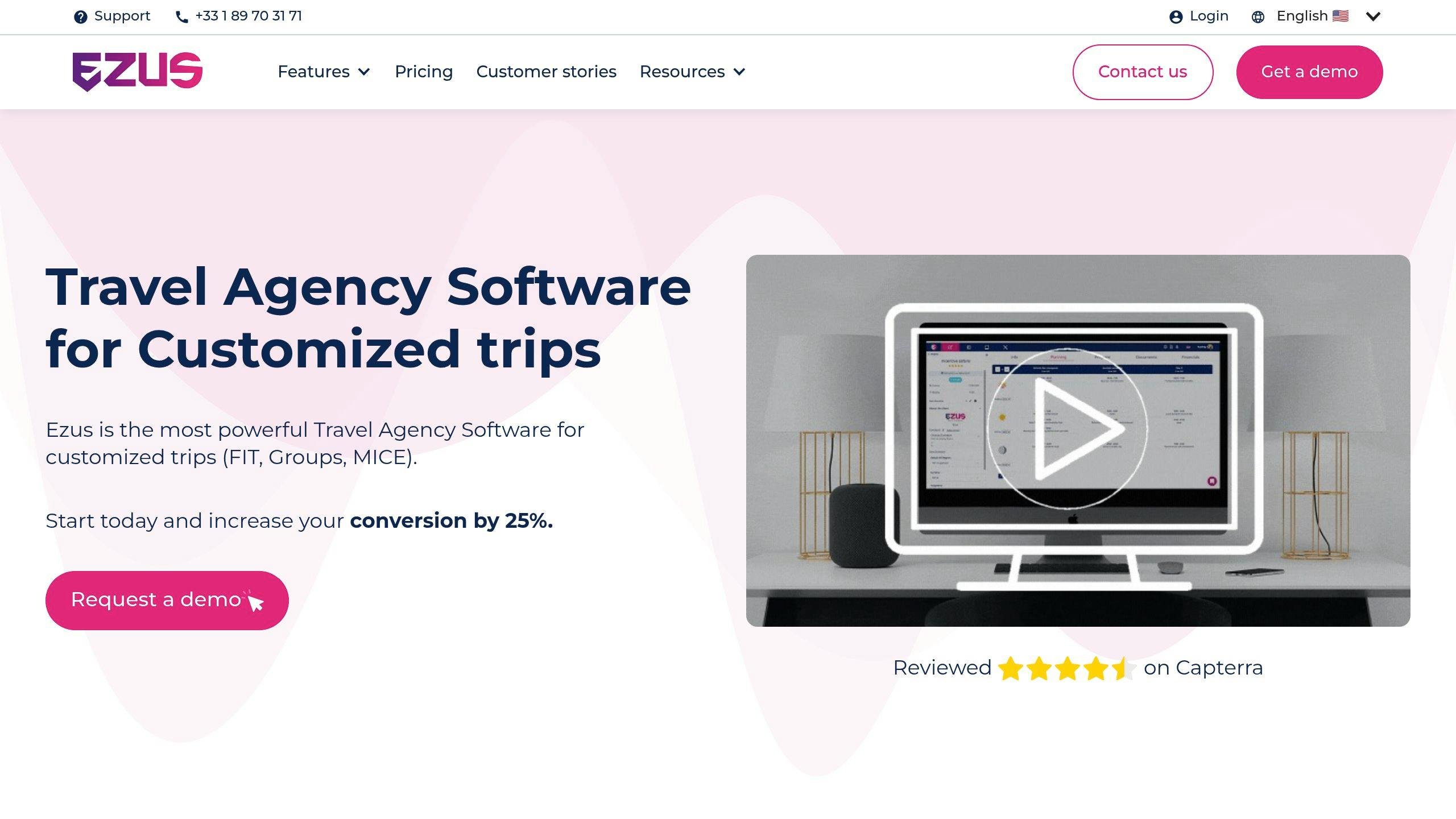
Ezus emphasizes modernizing its interface but leans heavily toward automating processes across various sectors rather than focusing on Destination Management Company (DMC)-specific needs. Only 30% of updates address DMC operations directly [1][4]. This leaves gaps that Odys addresses through close collaboration with DMCs.
Here’s a snapshot of Ezus’ reliability metrics:
| Performance Metric | Ezus |
|---|---|
| System Uptime | 99.4% [5][4] |
| API Error Rate | 2.1% [1] |
| Support Response | 4-hour average, 75% resolved in 24 hrs [5][4] |
The internal roadmap shows that only 2 out of 10 planned features focus on DMC-specific needs, with most updates catering to general travel agency operations [4]. One notable exception is the "Advanced Group Management" tool, set for release in Q1 2025 [1].
Toogo Platform History
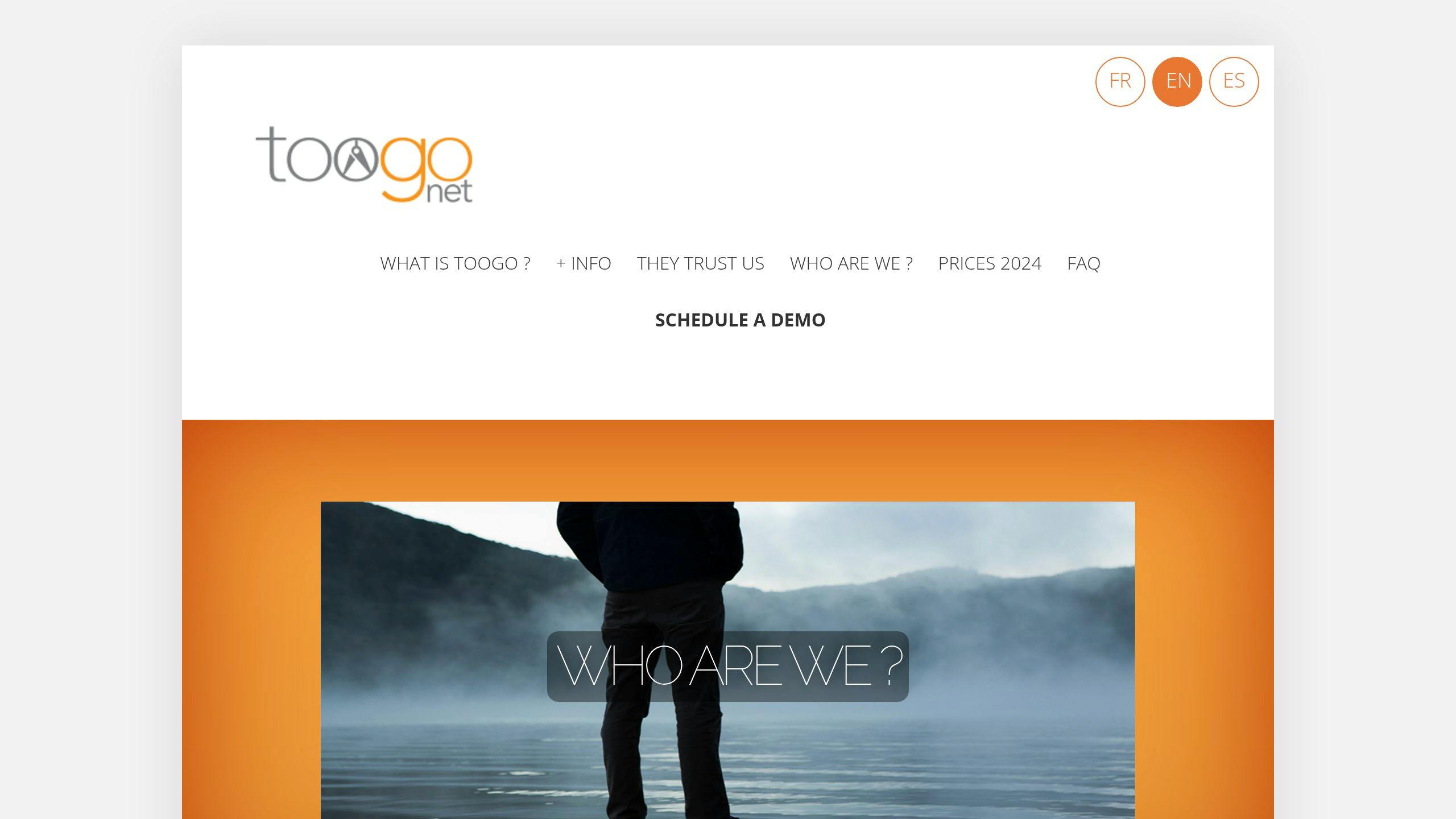
Toogo has built its reputation on a conservative update strategy, leading to an impressive 99.8% uptime [6][4]. However, this focus on stability has come at the expense of modern functionality. The platform's core architecture, unchanged since 2011, now creates challenges for operational efficiency.
"Toogo's strength lies in its battle-tested core system that handles complex DMC operations reliably." - Pierre D., Costa Rica DMC Owner [3]
Recent data from 2024 highlights efficiency issues:
| Operational Impact | Evidence |
|---|---|
| MICE Events | 3x more staff hours vs. Odys [6] |
| Feature Updates | 12-18 months for features like Mapbox [3][4] |
| System Performance | Slows with 500+ users [4] |
Despite its reliable core system, which averages only 4 data sync failures per month [6], Toogo’s lack of dynamic pricing tools forces agencies to rely on manual workarounds [3][6].
Technical support also presents challenges. With an 8-hour SLA for critical issues, delays during peak booking periods can disrupt operations, especially when financial module errors hold up deposit processing [3][6]. While Toogo’s stability remains a strength, its slower pace of updates limits its ability to meet the evolving needs of DMCs.
Odys Platform Overview
DMC Industry Background
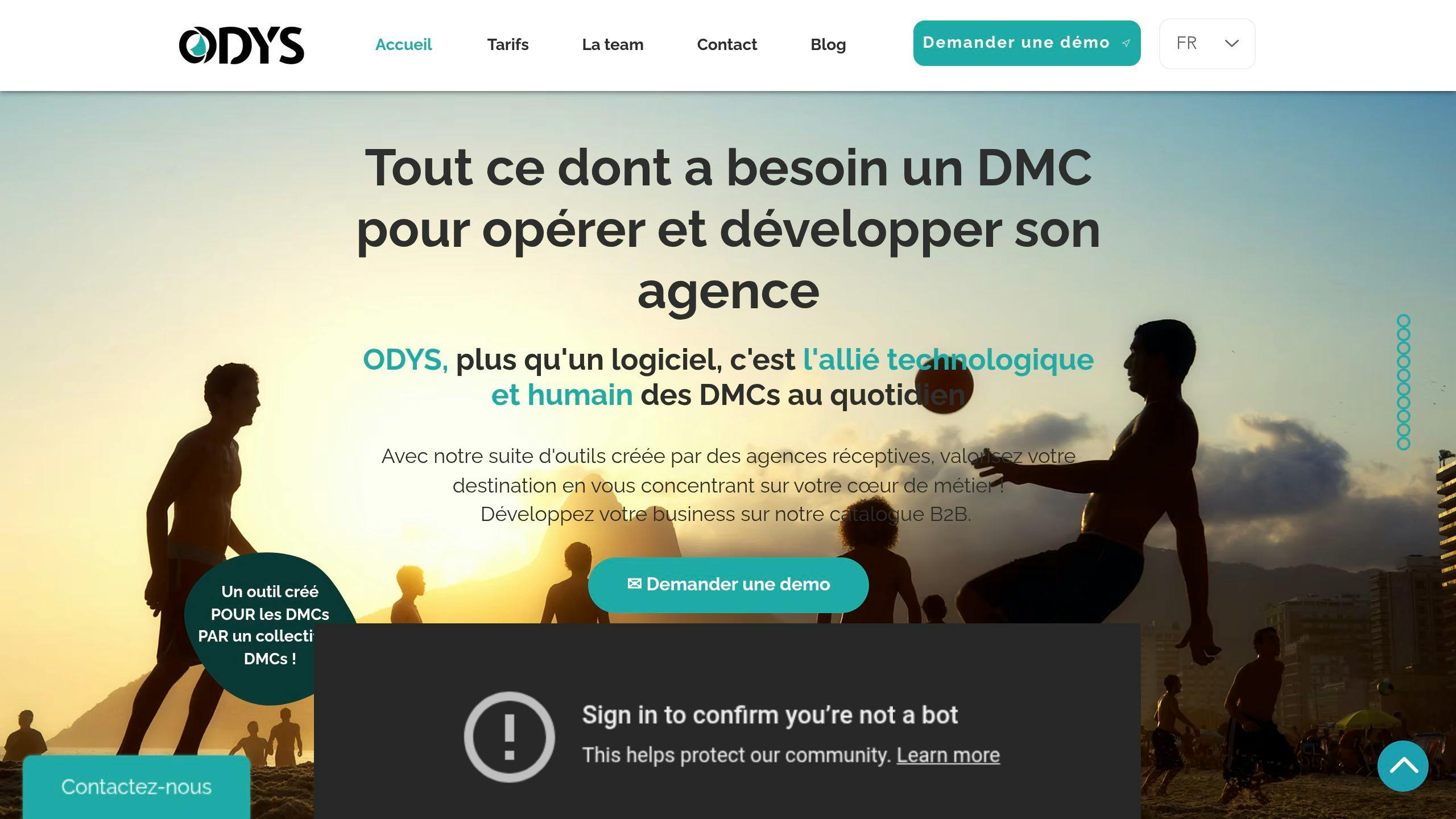
Unlike Ezus and Toogo, which face challenges in catering specifically to Destination Management Companies (DMCs), Odys was developed in partnership with experienced DMCs. This collaboration ensured the platform was designed to address real-world needs, combining commercial, operational, and financial workflows into one streamlined system.
Key Platform Features
Odys blends advanced technology with workflows tailored for DMCs, offering features that address industry-specific challenges:
| Feature Category | Functionality |
|---|---|
| Sales Pipeline | Interactive proposals, built-in quality tracking, client discovery templates |
| Operations | Real-time supplier availability, GPS-based guide tracking, offline mobile access |
| Financial Tools | Multi-currency commission tracking, automated supplier payments, real-time profitability analysis |
A standout feature is the integrated supplier platform, which allows direct booking validation, cutting down on email exchanges. Another useful tool is the real-time workload tracking system, enabling DMCs to manage resources efficiently across projects. These features directly tackle pain points seen with Ezus and Toogo, such as manual supplier updates and limited real-time functionality.
Pricing Structure
Odys uses a tiered pricing model that adjusts based on company size and trip volume:
| Company Size | Monthly Base Fee |
|---|---|
| Small DMCs | $300 |
| Medium DMCs | $400 |
| Large DMCs | $500 |
This scalable approach avoids the fixed $150-per-user model used by Toogo and addresses issues like manual reconciliation and limited collaboration seen in other platforms. By aligning costs with trip volume, Odys provides a more adaptable solution for DMCs of all sizes.
Conclusion: Platform Selection Guide
Platform Comparison Summary
Choosing the right DMC software depends on factors like industry focus, modern features, and affordability. Here's a quick breakdown of the three platforms:
| Feature | Ezus | Toogo | Odys |
|---|---|---|---|
| Monthly Cost | Starting $99 | $150 per user | $300–$500 base fee |
| Support Model | Live chat + account managers | Email (48hr response) | 2hr SLA emergency support |
| Training Period | Data migration tools | 8+ weeks | DMC-veteran onboarding specialists |
| Unique Strength | Process automation | Industry expertise | Monthly updates tailored to DMCs |
Why Choose Odys?
Ezus and Toogo each bring their own strengths, but Odys addresses their limitations by working closely with operational DMCs to refine its features. This collaboration ensures Odys delivers specialized tools without inflating costs.
One standout feature is Odys's monthly updates, driven by feedback from its DMC network. Unlike Toogo, which has seen little change over the years, or Ezus, which struggles with PowerPoint automation, Odys continually evolves. For example, its dynamic pricing modules directly tackle gaps in Toogo's pricing workflows.
Odys also boosts efficiency, offering a 30% faster itinerary creation process compared to Ezus's manual methods. It retains Toogo's level of specialization but at a more accessible price point. Plus, with an average training period of just 3 weeks and support from experienced DMC specialists, it balances advanced functionality with ease of use.