5 Steps to Optimize the Profitability of a DMC Agency
Learn five essential strategies to enhance profitability for your DMC agency, from pricing flexibility to effective supplier relationships.
· malysddm

- Use All-in-One Management Software: Automate tasks, track profits, and streamline operations to save time and money.
- Adopt Flexible Pricing Strategies: Adjust rates based on demand, costs, and market trends to maximize earnings.
- Offer More Services: Add high-value options like luxury travel or corporate events to diversify income streams.
- Build Strong Supplier Relationships: Negotiate better deals and maintain quality through clear communication and data.
- Improve Marketing and Sales: Use targeted campaigns, CRM tools, and personalized strategies to attract and retain clients.
Each step is designed to help your DMC overcome rising costs, tighter timelines, and increased competition. Let’s dive in.
Step 1: Use All-in-One Management Software
Managing a Destination Management Company (DMC) comes with plenty of challenges, and relying on manual processes can drain both time and profits. That’s why using all-in-one management software is a smart move - it simplifies operations and helps keep your bottom line healthy.
Key Features to Look for in DMC Software
When choosing the right software for your DMC, focus on features that directly influence your profitability. Here are some essential ones:
| Feature Category | Impact on Profitability |
|---|---|
| Sales Pipeline Management | Helps convert more leads into confirmed bookings |
| Financial Tracking | Offers real-time insights into costs and margins |
| Supplier Management | Makes communication and rate management easier |
| Booking Automation | Cuts down on manual tasks and reduces errors |
| Payment Processing | Automates transactions and tracks commissions |
How Odys Helps DMCs
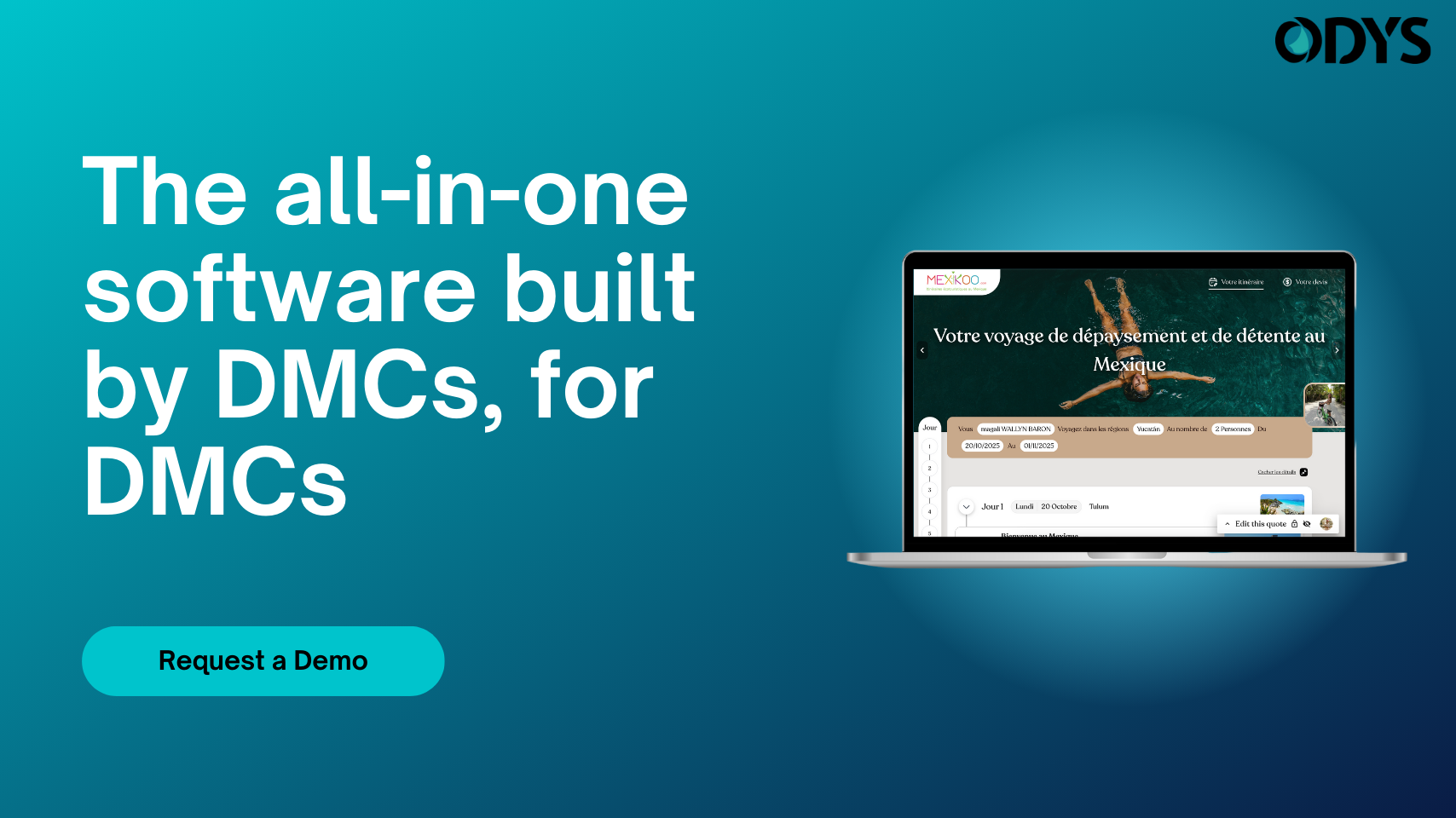
Odys is an all-in-one platform designed to simplify DMC operations. It combines tools for sales, financial tracking, and supplier management into one system, giving you real-time insights and smoother workflows. With automation at its core, Odys helps DMCs handle rising costs and shorter planning timelines more effectively.
Instead of juggling spreadsheets, Odys centralizes bookings and supplier communications, saving time and reducing errors. Plus, its real-time profit tracking keeps your financial performance on point.
How Software Improves Profitability
Using all-in-one software isn’t just about convenience - it directly impacts your profitability in multiple ways:
| Profit Driver | Software Impact |
|---|---|
| Automation Benefits | Lowers labor costs and minimizes costly mistakes |
| Data-Driven Decisions | Helps you set better prices and negotiate smarter |
| Customer Experience | Speeds up response times and improves proposals |
Once you’ve got the right software in place, you’ll be ready to refine your pricing strategies to stay competitive in the market.
Step 2: Adopt Flexible Pricing Strategies
Flexible pricing keeps your services competitive and ensures profitability, much like how management software streamlines operations.
Why Flexible Pricing Matters for DMCs
Ditch static pricing and adjust rates based on specific factors:
| Pricing Factor | How It Impacts Strategy |
|---|---|
| Seasonal Demand | Charge higher rates during busy seasons, offer better deals in quieter periods. |
| Market Conditions | Adapt pricing to align with local events and competitors. |
| Client Segments | Tailor rates for corporate clients versus leisure travelers. |
| Service Value | Set premium prices for exclusive or highly sought-after experiences. |
Industry reports suggest dynamic pricing can increase revenue by 10-15% [5].
Leveraging Data for Smarter Pricing
Smart pricing decisions depend on solid data analysis, often supported by technology:
| Data Type | How It Shapes Pricing |
|---|---|
| Historical Bookings | Identifies trends in demand and popular services. |
| Competitor Rates | Helps you position your pricing competitively. |
| Operating Costs | Ensures your margins remain profitable. |
| Client Feedback | Provides insights into perceived value and price sensitivity. |
The use of advanced data analytics tools, clear communication with clients about the pricing strategy, and continuous review and adjustment of prices based on market conditions are essential factors for successful flexible pricing implementation." [6]
To make flexible pricing work, keep an eye on market trends, segment your audience, utilize pricing tools, and stay transparent. Regularly analyze your data and adjust rates to maintain your edge.
Once your pricing strategy is refined, you’ll be ready to broaden your service offerings to generate even more revenue.
Step 3: Offer More Services to Increase Revenue
Adding new services can help your DMC bring in more revenue. Here's how to identify and introduce profitable options effectively.
Identifying High-Profit Services
Look for services that can command higher prices and set your DMC apart in the market:
| Service Category | Profit Potential |
|---|---|
| Corporate Events | High |
| Luxury Travel | Very High |
| Eco-Tourism | Medium-High |
| Adventure Sports | High |
| Special Events | Very High |
When selecting new services, ensure they align with your existing setup and supplier network. You'll need the right expertise, certifications, and partnerships to make them work. Risk management systems are also crucial for smooth operations [1].
Upselling and Cross-Selling Strategies
Increase revenue from existing bookings by offering premium extras:
| Upselling Strategy | How to Implement |
|---|---|
| Premium Accommodations | Offer luxury upgrades with VIP perks |
| VIP Transportation | Provide private luxury transfers |
| Package Bundles | Combine premium services at good rates |
Use your CRM tools to track customer preferences and personalize your upselling efforts. This not only increases revenue but also improves customer satisfaction [2][4].
Monitor how well your new services are performing by tracking key metrics like revenue per service, client satisfaction, booking frequency, and profit margins.
Once your service portfolio is expanded, the focus should shift to building stronger supplier relationships to maintain quality and control costs.
Step 4: Build Strong Supplier Relationships
Strong supplier relationships are key to keeping costs down and maintaining consistent service quality. Both factors play a big role in client satisfaction and repeat business. Below, we’ll dive into practical ways to create and maintain these partnerships.
How to Negotiate Better Deals
Negotiating with suppliers isn’t just about getting the lowest price - it’s about finding a win-win solution. Here are some strategies successful DMCs use to secure better deals:
| Negotiation Strategy | Benefits | How to Use It |
|---|---|---|
| Volume Commitments & Early Payments | Get discounted rates and help suppliers with cash flow | Guarantee minimum bookings and offer quicker payments |
| Exclusive Arrangements | Gain priority access to inventory | Agree to feature suppliers as preferred partners |
| Performance Incentives | Encourage high-quality service | Set up bonuses for top performance |
The secret to better negotiations? Show your value. Use data to highlight your booking volumes and reliable payment history. This builds trust and strengthens your position.
Using Technology to Manage Suppliers
Managing suppliers is easier and more efficient with the right tools. Platforms like Odys offer features that make supplier management more transparent and streamlined:
| Feature | How It Helps Your Business |
|---|---|
| Centralized Contract & Booking Management | Cuts admin work by 40% and reduces errors |
| Real-time Rate Updates & Performance Analytics | Keeps pricing accurate and spots top suppliers |
To get the most out of your supplier relationships, focus on clear communication and regular performance tracking. Schedule reviews to maintain high service standards and uncover new opportunities for collaboration.
By leveraging technology and data to manage suppliers effectively, DMCs can reduce costs, improve service quality, and increase revenue", say industry experts [4].
Key metrics to track supplier performance include:
- Service reliability
- Response times
- Client feedback scores
- Price competitiveness
Having a dedicated team to manage supplier relationships ensures clear communication and keeps agreements on track. This approach not only boosts efficiency but also strengthens your position when it’s time to renegotiate terms.
Once your supplier relationships are running smoothly, it’s time to shift your focus to improving marketing and sales strategies to attract and retain more clients.
Step 5: Improve Marketing and Sales Processes
After building strong supplier relationships, it’s time to focus on refining your marketing and sales strategies. These efforts are critical for attracting and keeping clients while improving your DMC's profitability. Today’s tools can help you achieve better results and lower client acquisition costs.
Creating Targeted Marketing Campaigns
For DMCs, effective marketing means reaching the right audience through smart segmentation, personalized content, and a multi-channel approach. Research shows that incorporating AI into targeted campaigns can boost sales revenue by 41%.
| Campaign Element | Strategy | Impact |
|---|---|---|
| Audience Segmentation | Group clients by industry and travel needs | Improves response rates |
| Content Personalization | Share case studies and testimonials tailored to industries | Builds trust and credibility |
| Multi-Channel Approach | Align messaging across different platforms | Drives 494% higher order rates |
Streamlining Sales with CRM Tools
CRM tools are game-changers for managing leads, creating proposals, and staying connected with clients. These systems simplify workflows, automate repetitive tasks, and help turn leads into bookings.
Marketing automation drives innovation, personalization, and seamless client engagement", says Sabah Noor [3].
Building Long-Term Client Relationships
Once your sales process is running smoothly, retention becomes the next priority. Successful DMCs use loyalty programs and personalized communication to keep clients engaged and coming back.
Did you know that 70% of salespeople lack formal training, according to TaskDrive [2]? Using CRM data effectively allows DMCs to create meaningful client interactions, which can lead to stronger relationships and repeat business.
Conclusion: Steps to Long-Term Profitability
Boosting DMC profitability requires a sharp focus on technology, pricing, and partnerships. Gray MacKenzie, an operations expert, puts it simply:
Your agency's profit margins ultimately come down to two essentials: How you decide to operate and how disciplined you are.
Key Steps to Profitability
Here’s a breakdown of five critical steps and their impact:
| Step | Key Impact |
|---|---|
| All-in-One Management Software | Simplifies operations and cuts costs |
| Flexible Pricing Strategies | Maximizes revenue per client |
| Service Expansion | Adds new income streams |
| Supplier Relationships | Lowers operational expenses |
| Marketing and Sales Processes | Strengthens client acquisition efforts |
These steps work best when paired with regular reviews and adjustments to meet evolving industry demands.
The Importance of Regular Updates
The DMC industry is evolving quickly, especially in how services are priced and delivered. To stay ahead, DMCs need to routinely assess pricing models, refresh service offerings, evaluate supplier agreements, and explore new tech solutions. Fine-tuning these processes not only boosts efficiency but also enhances client satisfaction.
Working with external partners is a huge spur to get better", say industry experts, emphasizing how collaboration and ongoing improvement are key to long-term success.
FAQs
Does automation lead to cost savings for business?
Automation can help DMCs cut costs by simplifying processes and boosting efficiency. Here's how it impacts profitability:
| Area | Cost-Saving Impact |
|---|---|
| Operations Management | Cuts manual tasks and errors by up to 90% |
| Communication Systems | Lowers administrative overhead by 60% |
| Financial Processing | Reduces accounting costs by 40% |
| Staff Productivity | Frees up 25% more time for strategic tasks |
Automation tools reshape DMC operations by:
- Automating Tasks: Processes like booking confirmations, payment handling, and supplier communication are handled automatically.
- Freeing Up Staff: Employees can focus more on building client relationships and planning strategically.
- Improving Accuracy: Fewer mistakes in pricing and scheduling help avoid unnecessary expenses.
To get the most out of automation, businesses should adopt systems with features like:
- Tools for margin and risk management
- Systems for managing contracts and suppliers
- Integrated payment solutions
These tools not only lower operational costs but also improve service quality and client satisfaction [4]. By weaving automation into their daily workflows, DMCs can save money and improve supplier management and pricing strategies.